
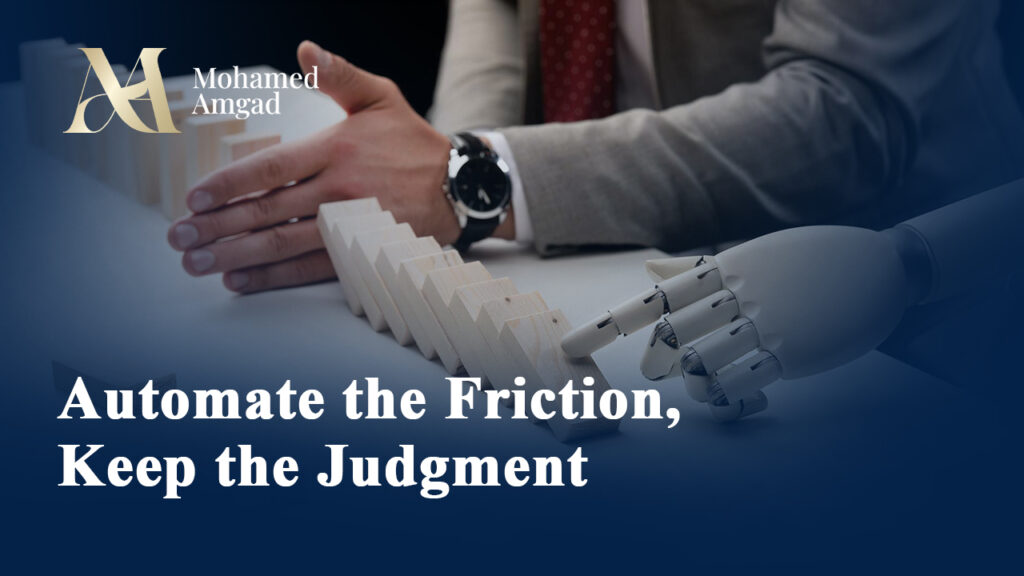
Automation is one of the most powerful tools available to any modern business. It removes repetitive work, reduces errors, and allows teams to move faster than they ever could manually. I am an enthusiastic supporter of it.
I have also seen it applied in the wrong places, and the cost of that mistake is usually paid by the customer.
Not all work is the same
Some work is frequent, predictable, and governed by clear rules. Data entry, reconciliations, status notifications, reminders, standard checks. This work consumes enormous amounts of time and energy while requiring very little human insight. It is exactly where automation shines.
Other work is occasional, unusual, or emotionally charged. A customer who is confused. A situation the process never anticipated. A request that technically fits the rules but clearly deserves an exception. This work depends on judgment, empathy, and context, and it is where automation tends to struggle.
A simple test
When a team proposes automating something, I ask one question. If this goes wrong, does putting it right require understanding a person’s situation?
If the answer is no, automate with confidence. If the answer is yes, automation can still help, but it should support a person rather than replace them. Technology can gather the information, suggest an answer, and handle the routine parts. A human should remain close enough to step in when the situation calls for it.
Always leave a door open
The most frustrating customer experiences often share one feature: there is no way out of the automated path. The customer knows their situation is unusual, but every route leads back to the same menu or the same standard reply.
A well-designed automated journey always includes a clear, easy way to reach a person when it is needed. Counterintuitively, customers use that option less when they know it exists, because they trust the system more.
Automation should free people, not remove them
The strongest case for automation is not that it reduces the need for people. It is that it frees people from work that never needed them in the first place, so they can spend their time on the conversations, decisions, and relationships where they genuinely add value.
When automation is done well, the human side of a business does not shrink. It becomes more visible, because the people who remain are doing the work that only people can do.
Review what you automated
Processes change, customers change, and rules that made sense two years ago may no longer fit. Automated processes do not complain when they become outdated. They quietly continue doing the wrong thing at scale.
It is worth reviewing automated workflows regularly, looking specifically at the cases they handle badly. Those edge cases are where the next improvement, or the next customer complaint, will come from.
Dr. Mohamed Mousa writes about financial technology, business strategy, and leadership.